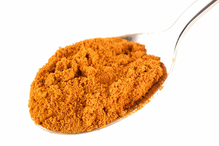
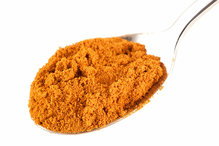
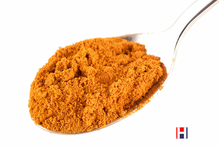
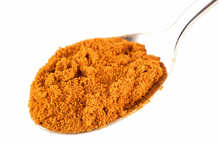
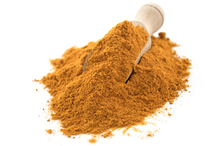
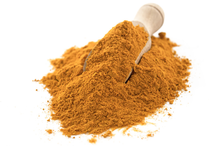
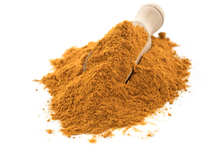
Turmeric is a bright yellow spice created from the rhizomes of the herbacious perennial
Curcuma longa. It has a musty, bitter taste and is very popular in curries, both to add colour and flavour. Turmeric originated in India and is now cultivated in many tropical countries, where is often used as a more affordable substitute for saffron.
Turmeric's colour comes from the pigment circumin, one of a range of naturally-occurring polyphenols found within the plant. Turmeric has primarily been used to aid digestion and bowel health, and it is thought that circumin plays a role in this by inhibiting inflammatory metabolites. However, little is known about this so far.
Turmeric is considered to be part of the ginger family, and the plants indeed look quite similar, though the taste is quite different. Turmeric is a popular constituent of curry powder, particularly as it gives it a bright yellow colour. When used as a food colouring, it is given the code E100, though quite why a manufacturer would write "E100" instead of "turmeric" is a mystery.
When cooking rice, you can add turmeric to the pot in order to make the rice a fun yellow colour. This is what they do in curry houses, as it's cheaper than using saffron.
A BBC news article points to evidence about circumin, a polyphenol found within turmeric: "An extract found in the bright yellow curry spice turmeric can kill off cancer cells, scientists have shown..." (source:
BBC News article about circumin and turmeric).