


Articles
Veganuary started as a simple challenge back in 2014 – eat plant-based for the whole of January – and it’s grown into one of the most popular ways people dip a toe into vegan eating each year. Plenty of Veganuary guides cover the basics of what to eat, but far fewer help with the harder part: actually keeping it up once the novelty wears off around week two. So here’s a friendlier way in, a week-by-week plan rather than a single list of recipes, with a different focus for each week, building from a stocked cupboard in week one through to a proper habit by week four, so you’re never improvising from scratch on a Tuesday evening.
Read More »
Dry January began as a small public health campaign back in 2013, run by Alcohol Change UK, and has since become one of the most widely adopted New Year traditions in Britain. A good mocktail is great for one evening, but the month itself is thirty-one days long, and squash on repeat gets old fast by week two. What actually makes a month alcohol-free sustainable is variety: something with a bit of a tang, something warming, something fizzy, so reaching for a drink still feels like a choice rather than a compromise. Worth building the rotation around what Whole Foods Market flagged as “Very Vinegar” for 2026 – sipping vinegars and shrubs used for a probiotic-like tang in place of alcohol – alongside kombucha and a proper herbal tea line-up.
Read More »
Winter sometimes has a way of quietly wearing people down. Shorter days, less daylight, colder mornings and the comedown after Christmas can genuinely leave people feeling flatter than usual, and that’s real, not something to brush off. January tends to be when it’s felt most, and the third Monday of the month – the 18th in 2027 – has picked up the nickname “Blue Monday” along the way. The specific date itself started life as a marketing calculation from a 2005 travel company press release rather than any real scientific finding, so there’s nothing special about that one day in particular, but the broader pattern behind it, winter genuinely affecting mood, is well documented. It’s a fair prompt, then, to look at the real, evidenced links between food and mood: magnesium, vitamin D in a UK winter, the gut-mood connection, and steady blood sugar versus a sugar crash. None of this replaces proper support for anyone dealing with persistent low mood, but it’s a genuine, grounded place to start.
Read More »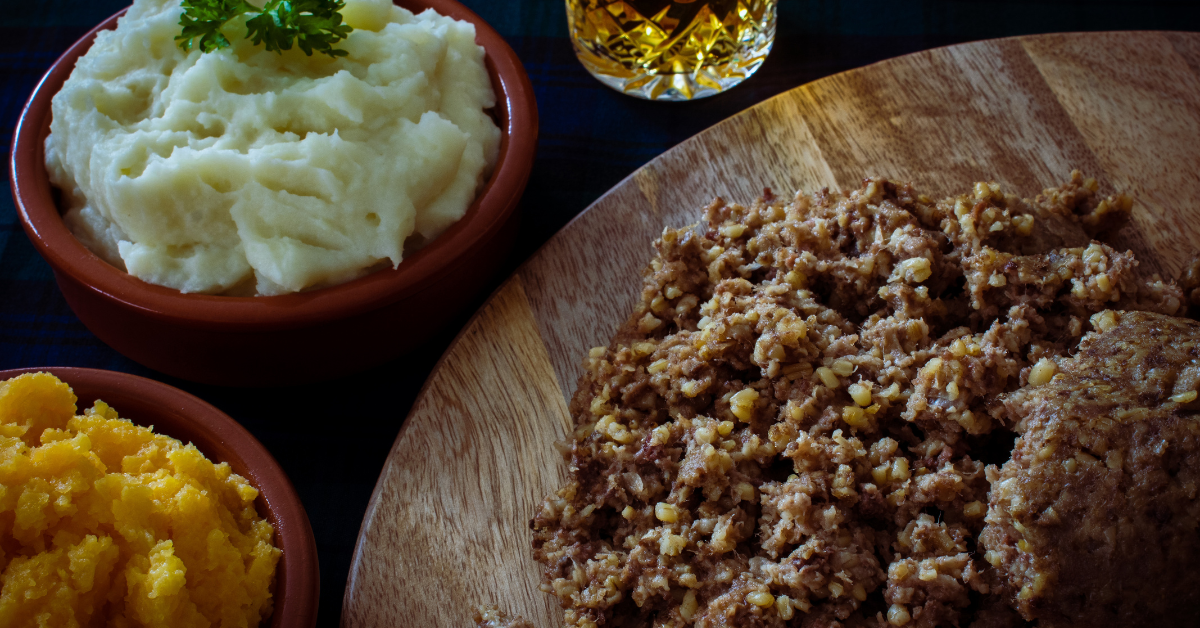
Grab a cold night at the end of January, a good poem and a proper feast, and you’ve got Burns Night: Scotland’s yearly toast to its most famous poet, held every 25 January. If you’ve never taken part before, it’s a lot more approachable than the pomp and ceremony suggests, and there’s no reason the tradition can’t be entirely plant-based. Here’s a friendly guide to what the evening’s actually about, plus a simple way to put together a vegan version of the classic Burns Supper at home.
Read More »
January brings a flood of “trends to try this year” content, most of it uncritical. This is meant to be the opposite: a look at what’s genuinely worth paying attention to in 2027, based on real forecasting rather than guesswork, and an honest note on what’s mostly noise. Two sources anchor this: Trendalytics’ Beauty + Wellness Forecast 2027, which points to a shift toward proactive, preventative “everyday well-being” and simpler, more transparent supplement routines, and Sporked’s 2027 food trend predictions, which confirm that “protein everything” keeps growing, just in more varied formats than before.
Read More »
By late January, the New Year’s resolution gym crowd is a few weeks in and starting to look past day one – which is exactly when recovery starts to matter more than the workout itself. This ties into the 2027 wellness forecast’s “functional strength training” trend, described as pairing strength work with genuine recovery support and daily performance nutrition rather than training harder and hoping for the best. The blog already covers protein basics well in How Much Protein Do I Need in My Diet? and Max Your Body’s Power With Protein, so this piece looks at the part those don’t: timing, pairing, and what to actually eat after training.
Read More »
24 December has a particular energy to it, the big shop is done, the presents are wrapped or they aren’t, and there’s usually still a house full of people to feed before the day itself even starts. This isn’t a piece about building another spread, it’s the opposite: a short list of genuinely low-effort things for the evening itself, built almost entirely from what’s already in the freezer from a month of batch cooking, so Christmas Eve stays an evening rather than another cooking day.
Read More »
Christmas pudding gets most of the attention in the run-up to the day itself, and rightly so, but it’s rarely the only thing on the dessert table by the time Christmas Day actually arrives. A trifle, a gateau, something chocolatey to pick at through the afternoon, most households end up with two or three puddings on the go rather than one, and it’s worth planning that spread properly rather than letting it happen by accident. Here’s how to build a dessert table that covers gluten-free and dairy-free without anyone feeling like an afterthought.
Read More »
Choosing what goes in the middle of the table on Christmas Day is, for a lot of vegetarian and vegan households, a bigger decision than anything else on the menu. A Wellington, a nut roast and a seitan “turkey” all do roughly the same job, they’re the thing everyone’s plate is built around, but they involve genuinely different amounts of work, different equipment, and suit different sized tables. Here’s how the three compare, so the decision can be made in November rather than in a panic on the 23rd.
Read More »
Christmas baking season officially starts on 1 December and gingerbread is usually one of the first things out of the oven, but “gingerbread” actually covers three quite different doughs depending on what you’re making. A batch of biscuit dough that’s perfect for cutting into gingerbread men will slump and spread if you try to build a house out of it, and a loaf-style gingerbread is a different recipe again, softer, more cake than biscuit. Here’s what each one needs, and how to tell which dough you actually want before you start mixing.
Read More »