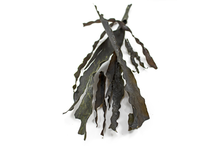
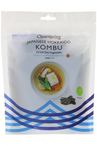
Kombu seaweed is quite similar in many ways to
wakame seaweed. Like wakame, it typically comes in the form of dried strips that are then soaked and added to food. Kombu is a little tougher than wakame, partly due to its higher fibre content. However, it softens considerably upon cooking.
Kombu seaweed comes from kelp that grows around the north of Japan. It is high in minerals, including iodine, potassium, calcium and iron, which means that the addition of a little kombu to soups and stir-fries can help to safeguard against mineral deficiences, as well as adding some extra crunch to the dish. Kombu is low in calories and high in fibre (around 30%).
Kombu also contains amino acids that acts as a tenderizer for other vegetables, helping to make them more digestible. For this reason, kombu is often added to beans to break down the fibres a little and thus to help prevent flatulence. This is also true of wakame seaweed. Kombu is known for its alginate content, which has been linked to beneficial effects in preventing obesity.
Rinse kombu seaweed before adding to your meals, in order to wash away the salt that often accumulates during the drying process.