


Camping Cupboard: Lightweight Wholefoods for Tent Cooking
What’s the best food to take camping? Lightweight dry wholefoods that cook fast in one pan: oats, couscous, red lentils, pasta and dried fruit. They need no fridge, weigh little, and turn into proper hot meals with nothing but a camp stove and boiling water.
Here’s how to build a camping cupboard that feeds you well for a weekend — or a fortnight — with recipes from our own kitchen adapted for life under canvas.
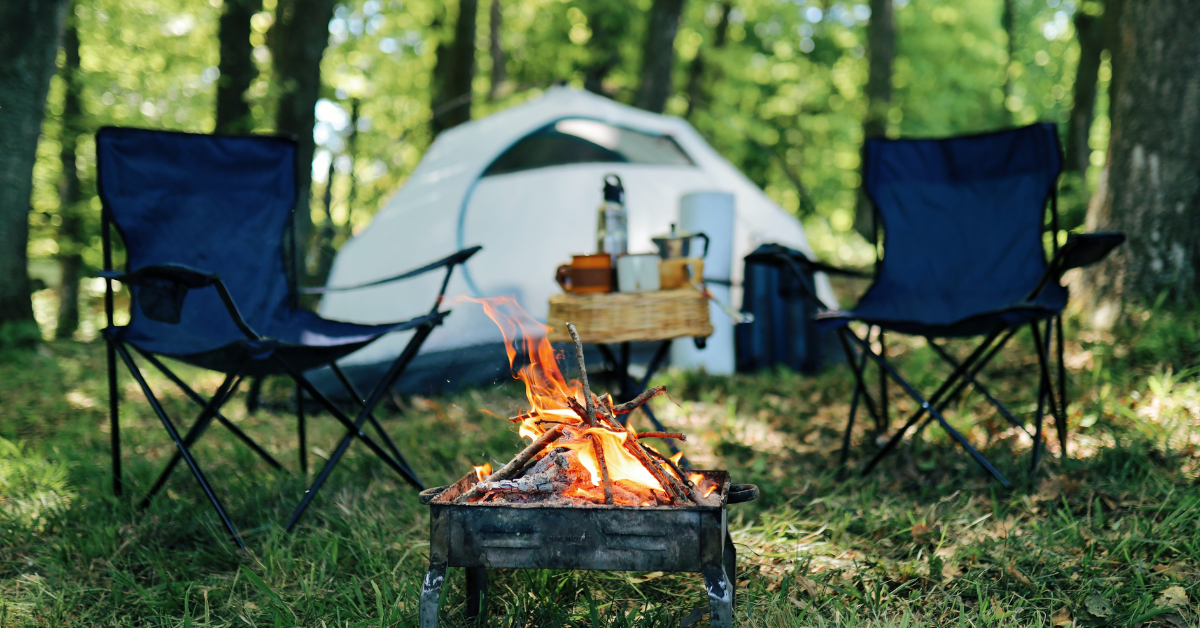
Good camping food obeys four rules: it’s light to carry, it survives without refrigeration, it cooks quickly (gas is precious), and it cleans up from a single pan. Dry wholefoods are the original camping food — long before freeze-dried expedition pouches, walkers carried oats, dried fruit and pulses for exactly these reasons. The bonus in 2026 is that they cost a fraction of branded “camping meals” and you know precisely what’s in them. Most of what follows comes from our own Sussex Wholefoods range, bagged in exactly the resealable sizes a rucksack wants.
Porridge is the undisputed king of campsite breakfasts: hot, filling, one pan, ready in five minutes. Sussex Wholefoods rolled oats are the all-rounder; pack them pre-mixed in a bag with milk powder, cinnamon, chopped dried apricots and a handful of freeze-dried berries (which rehydrate in the pan into bursts of real fruit) so the whole breakfast needs only water. For inspiration, our Instant Power Porridge shows how far a humble oat can be vamped up, and the Sweet ‘n’ Nutty Millet Porridge is a lovely gluten-free alternative that cooks just as fast.
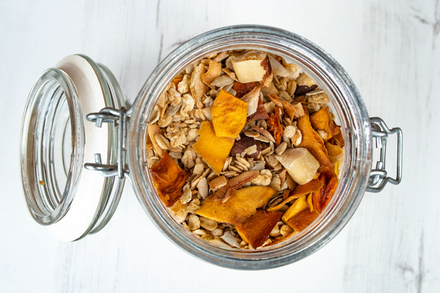
No stove in the morning, or racing to break camp? Cold-soaked muesli works beautifully — cover it with water or milk before you take the tent down and it’s ready when you are. A bag of homemade granola is the luxury option; make the Maple Pecan Granola or the tropical Brazil Nut, Mango & Coconut Granola before you leave and breakfast becomes the best moment of the day.
The Five-Minute Hero: Couscous
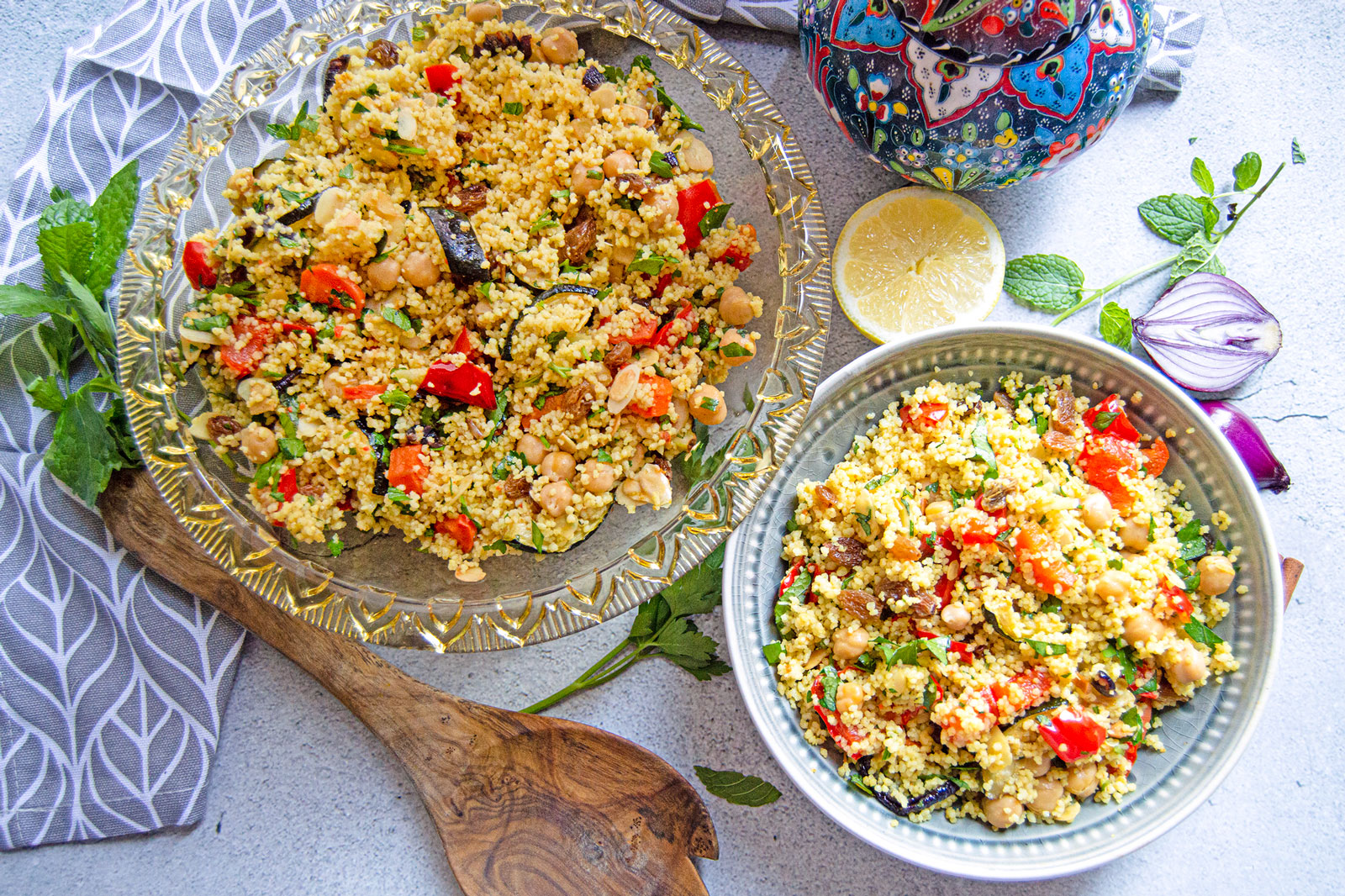
If we could pack only one dinner ingredient, it would be couscous. No simmering, no draining: pour over boiling water, cover with a plate, wait five minutes, fluff with a fork. Stir through olive oil, a handful of toasted nuts, dried apricots and whatever the campsite shop yielded, and you have a meal that would pass muster at home. It weighs almost nothing and a 500g bag feeds four generously. Quinoa from our quinoa range is the higher-protein alternative if you can spare twelve minutes of simmering.
One-Pan Dinners That Actually Work on a Camp Stove
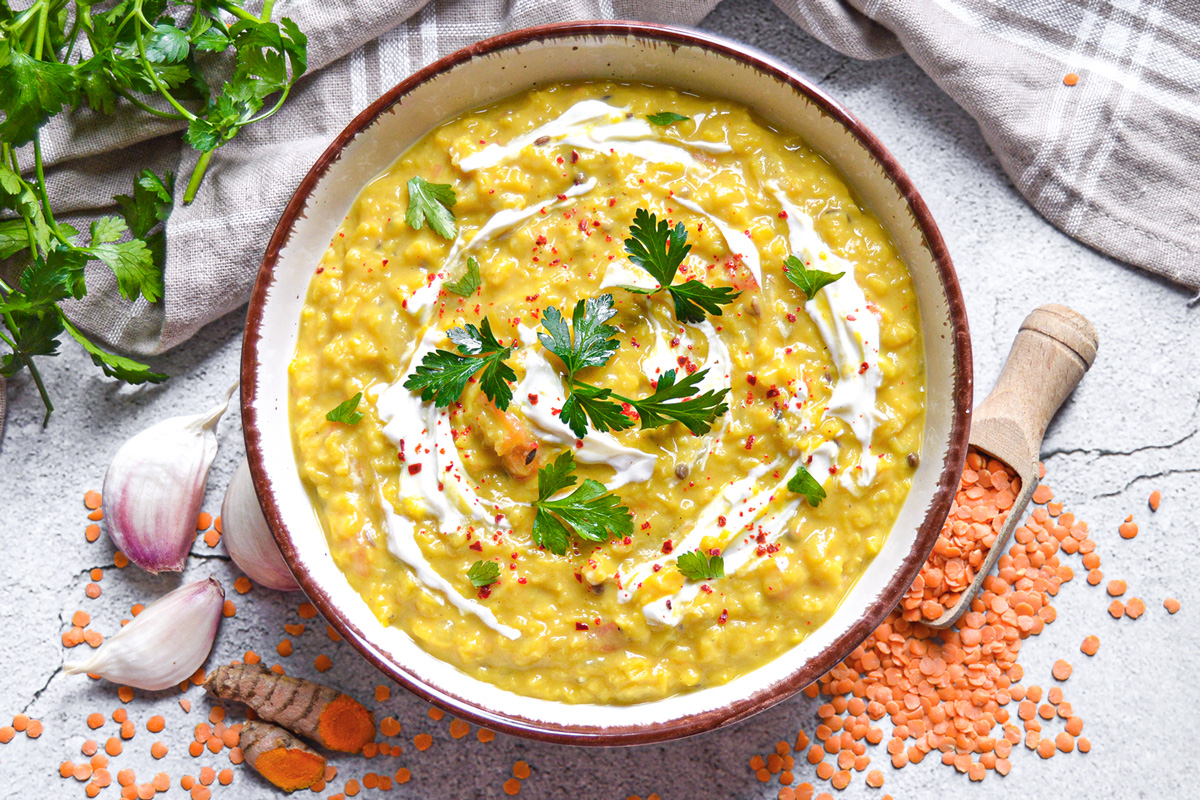
Red lentil dahl. Sussex Wholefoods red lentils need no soaking and collapse into a thick, warming dahl in 20 minutes. Our Coconut & Lentil Dahl adapts perfectly to one pan — bring a small pot of curry powder and a block of coconut cream, and it’s the best thing anyone has ever eaten in a field.
One-pot pasta. Cook pasta directly in its sauce and you save water, gas and washing up. Our Sun-Dried Tomato & Pepper One Pot Pasta was made for exactly this — sun-dried tomatoes are a camping cupboard natural, carrying huge flavour at almost no weight. A handful of dried mushrooms, rehydrated in the cooking water, deepens any tomato-based pan meal.
Quick polenta. The forgotten camp food: polenta cooks in minutes into a soft, buttery base for anything grilled over the fire. Noodles fill the same fast-carb slot for stir-fry-style pans.
The No-Cook Layer: Snacks and Emergency Rations
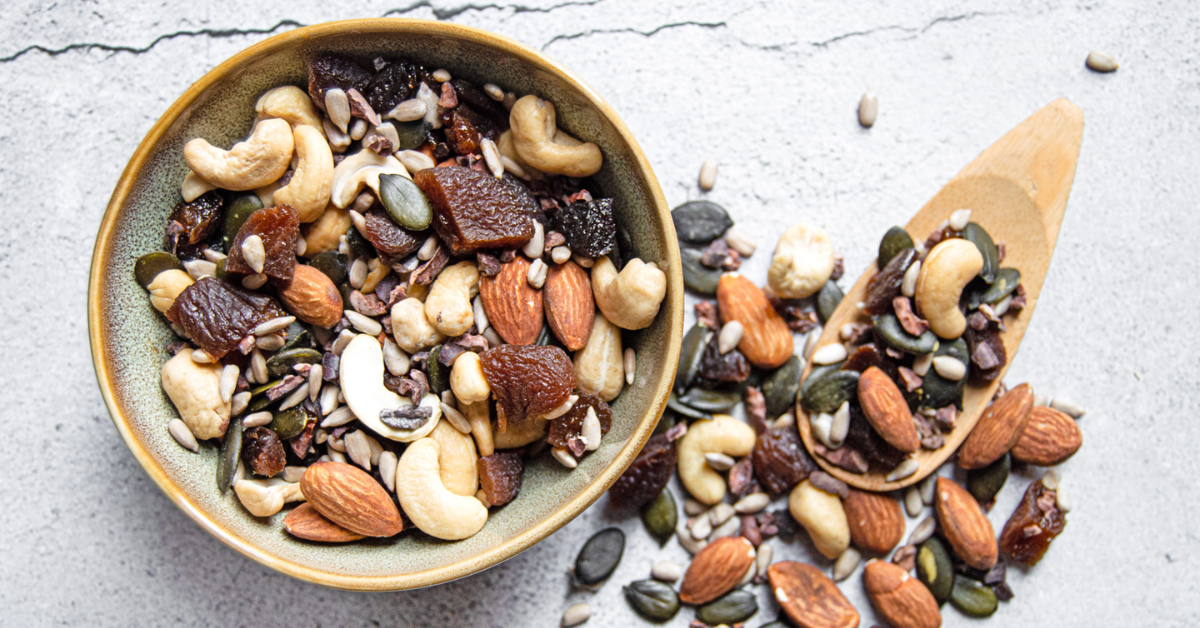
Between meals — and for the day the stove won’t light — pack a no-cook layer. A generous bag of trail mix is non-negotiable walking fuel; our Essential Trail Mix recipe makes it by the kilo for less.
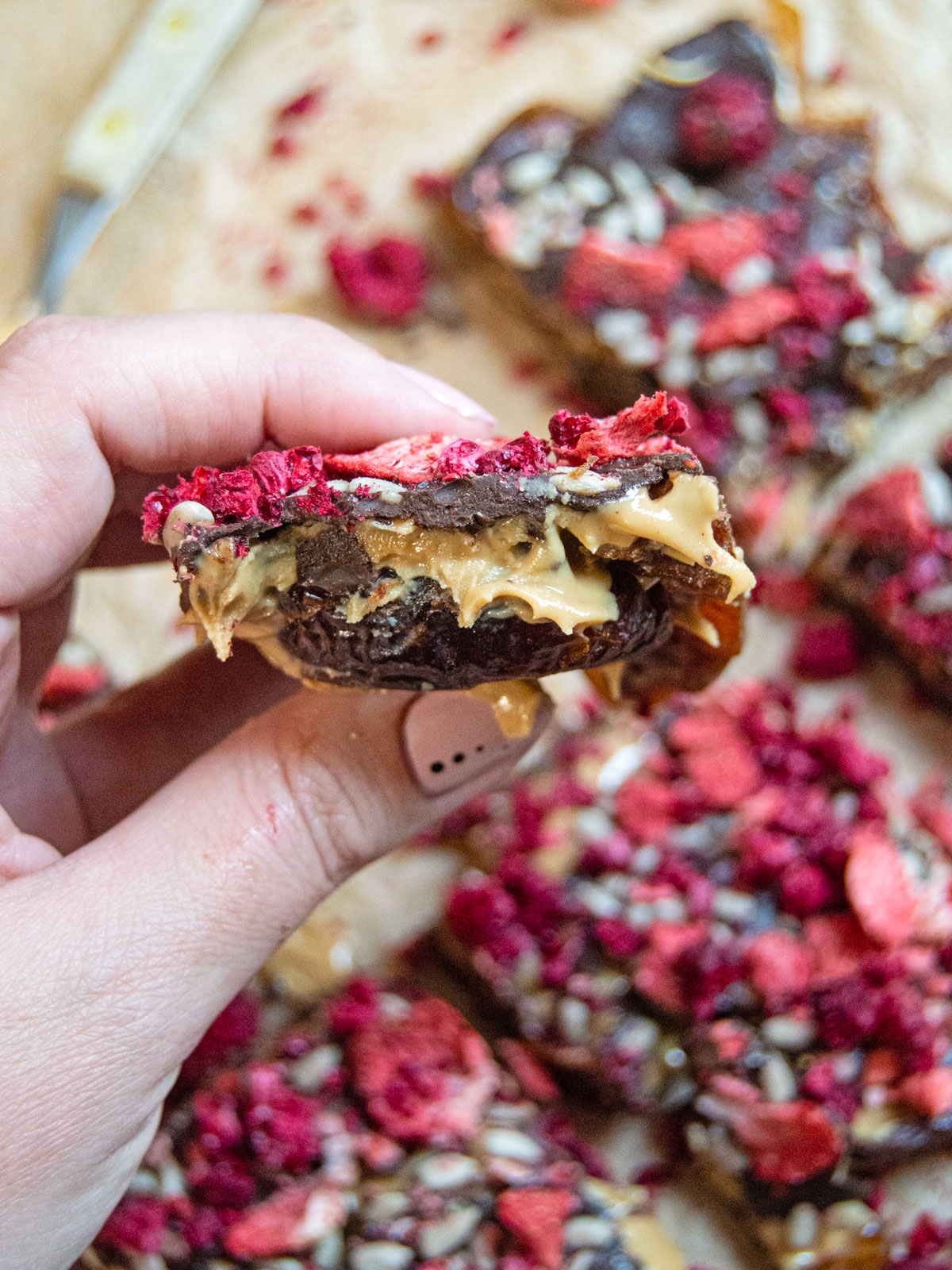
The camping discovery of recent years, though, is freeze-dried fruit. It’s the lightest food in the rucksack by far — a whole punnet of strawberries weighs barely anything once freeze-dried — yet the flavour is more intense than fresh. Eat it straight from the bag on a climb, stir it into morning porridge where it rehydrates into something remarkably close to fresh fruit, or crush it over cold-soaked muesli. Unlike fresh fruit it can’t bruise, squash or leak, and unlike ordinary dried fruit it stays light and crisp in the heat.
Round out the layer with dates for instant energy, baked flapjacks — the Gluten-Free Harvest Flapjacks travel brilliantly — and coconut flakes, which toast in a dry pan into something dangerously snackable.
Packing It All: Weight and Waste
Decant everything from boxes and jars into zip-seal bags before you leave, labelled with cooking instructions written in marker pen. Dry wholefoods are forgiving: no use-by panic, no cool box space, and any leftovers go back in the cupboard at home rather than the bin. As a rough guide per person per day, allow 80g oats, 100g couscous or pasta, 75g lentils, 50g trail mix and 50g dried fruit — about 350g of food weight, which is lighter than a single tin of beans and considerably better eating.
A few small extras transform camp cooking from functional to genuinely good, at almost no weight cost. A film canister of mixed spices (smoked paprika, cumin, chilli) seasons everything from dahl to couscous. A small bottle of olive oil does cooking and dressing duty. Stock cubes turn pasta water and couscous into something with depth. And a bar of dark chocolate, kept at the bottom of the food bag, becomes campfire pudding — melted over a banana in foil, or simply eaten while staring at the fire, which is what camping is really for.
If you’re walking between camps rather than pitching by the car, weight discipline matters more: favour couscous over pasta (faster cooking means less fuel), choose the lightest, densest snacks (dates and trail mix for energy per gram, freeze-dried fruit for flavour per ounce of pack weight), and skip anything in glass. Car campers can afford the luxuries — the full granola bag, a few extra bags of freeze-dried fruit, fresh vegetables for the first night’s dahl.
The quiet beauty of the camping cupboard is that it isn’t really a separate cupboard at all. Every ingredient here earns its place in the everyday kitchen too, which means nothing you buy for the trip ever goes to waste. Stock up once, eat well in a field, then keep eating well at home.
What food should I take camping without a fridge?
Dry wholefoods: oats, couscous, pasta, red lentils, dried fruit, freeze-dried fruit, nuts and dried mushrooms. All keep for weeks unrefrigerated, weigh little and cook quickly on a single burner.
What’s the easiest meal to cook on a camp stove?
Couscous — it needs only boiling water and five minutes covered, with no simmering or draining. Red lentil dahl and one-pot pasta are the best fuller meals, each needing one pan and about 20 minutes.
How much food should I pack per person for camping?
Around 350–450g of dry food per person per day covers three meals and snacks: roughly 80g oats for breakfast, 100g couscous or pasta for dinner, 75g lentils or protein, and 100g of trail mix and dried fruit for the day’s grazing.
Do oats and couscous go off in a warm tent?
Not over any normal trip. Dry grains keep for months even in summer warmth, provided they stay dry — pack them in sealed bags and keep them out of direct sun. Freeze-dried fruit is even more forgiving — as long as the bag stays sealed against moisture, it keeps its crispness for months.
This article is for general information only and is not a substitute for professional medical or dietary advice.