


Gingerbread, Three Ways: A Baking Guide for Cut-Outs, Houses and Loaves
Christmas baking season officially starts on 1 December and gingerbread is usually one of the first things out of the oven, but “gingerbread” actually covers three quite different doughs depending on what you’re making. A batch of biscuit dough that’s perfect for cutting into gingerbread men will slump and spread if you try to build a house out of it, and a loaf-style gingerbread is a different recipe again, softer, more cake than biscuit. Here’s what each one needs, and how to tell which dough you actually want before you start mixing.

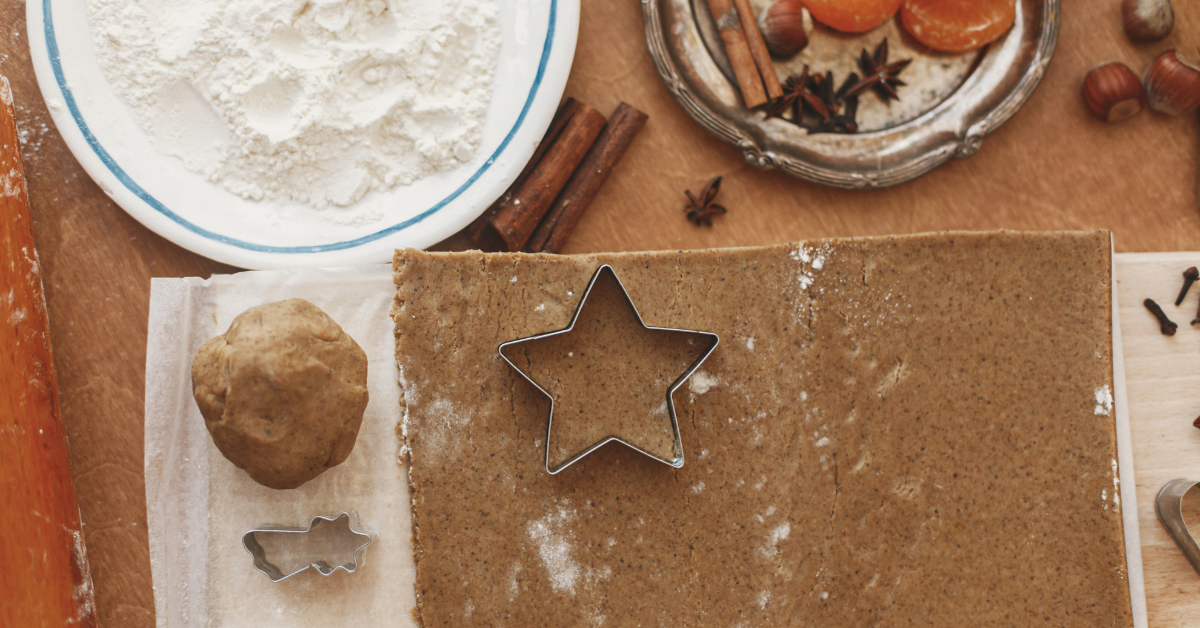
The word “gingerbread” gets used for three genuinely different things in the kitchen: a firm, low-spread biscuit dough for cutting into shapes and decorating, an even firmer, sturdier version for building a house that needs to hold weight and dry hard, and a soft, moist spiced loaf or traybake that’s really closer to a cake. They share the same core spices, ginger, cinnamon, cloves, and usually treacle or golden syrup for that characteristic dark colour and flavour, but the ratio of flour to fat to syrup changes considerably between the three, which is why a house recipe used for cut-out men comes out tough, and a cut-out recipe used for a house collapses under its own weight.

Gingerbread Men: The Cut-Out Dough
Gingerbread Men uses a dough that’s firm enough to roll out and hold a crisp edge when cut, but still short enough to bite through easily once baked. Chill the dough for at least half an hour before rolling, this is the single biggest factor in getting a clean cut-out shape rather than one that spreads and loses its edges in the oven, and roll it on the thinner side, around 4-5mm, for a snappier finished biscuit rather than a soft, cakey one. It’s a good one to get children involved with, the dough is forgiving of over-handling in a way a house dough isn’t.
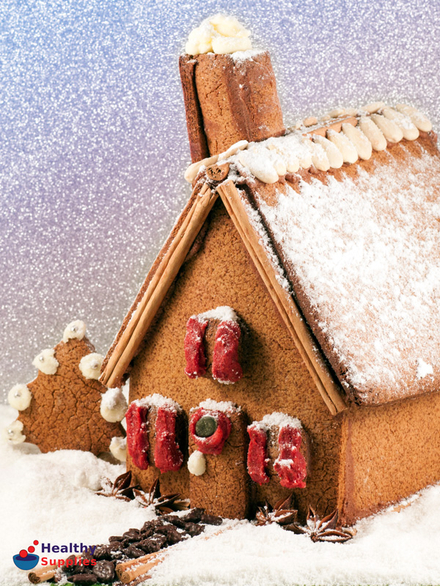
Gluten-Free Gingerbread House needs a noticeably firmer dough than the cut-out version, since the walls and roof panels have to support their own weight and, eventually, a fair amount of icing and decoration on top. Roll it slightly thicker than a cut-out dough, closer to 6-8mm, and let the baked panels cool completely and firm up before attempting to assemble the house, warm gingerbread bends rather than holds a straight wall. A tray of melted sugar or a thick royal icing works as the “glue” to join panels, piped generously along each seam and left to set hard before adding any weight, like a roof panel, on top.
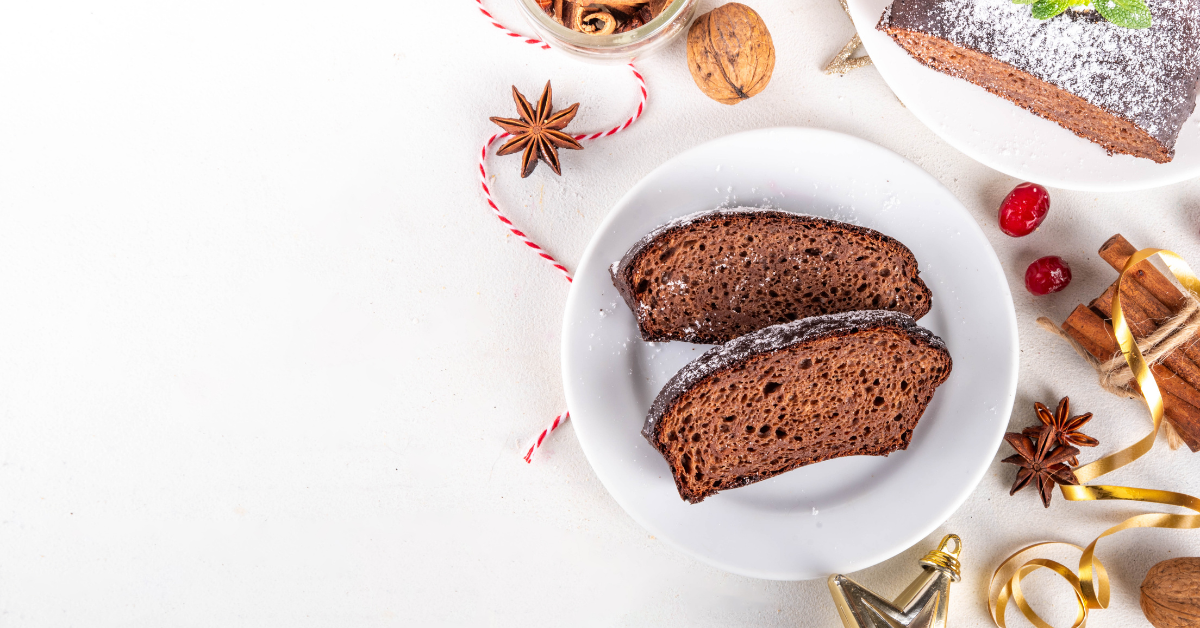
Gingerbread Loaf and Traybake: The Soft Version
A gingerbread loaf or traybake uses a completely different method to the biscuit doughs above, it’s a melted-fat batter rather than a rubbed-in dough, closer to how you’d make a treacle cake than a biscuit. Golden syrup, treacle and butter or a dairy-free alternative are melted together first, then stirred into the dry ingredients along with an egg or egg replacer, giving a batter that’s poured rather than rolled. It’s a good format to use on a night with less time for careful cutting and decorating, a traybake needs no shaping at all, and it keeps well in a tin for several days, improving slightly as the spices settle.
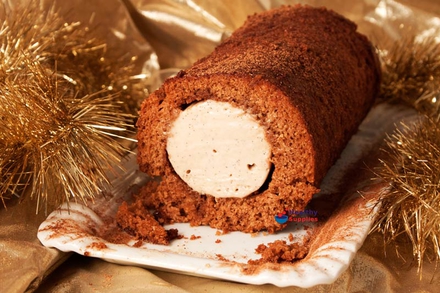
Arctic Roll: Gingerbread Flavour Without a Biscuit at All
Gingerbread Arctic Roll takes the same warming spice profile and puts it into a rolled sponge and ice cream dessert instead, worth knowing about if biscuits aren’t really what your household wants from gingerbread season, or if there’s a birthday or dinner party landing in December that calls for something a bit more of an occasion pudding. It’s also a useful one for a gluten-free and dairy-free table, since it’s built to be both from the ground up rather than adapted afterwards.

The Gluten-Free Swap, Across All Three
Gingerbread doughs generally adapt well to a gluten-free flour blend because the structure relies more on the syrup and fat binding everything together than on gluten development, unlike, say, a yeasted bread. The house dough is the one to be most careful with, since it needs the most structural strength, so it’s worth a small test panel baked and left to cool before committing a full gluten-free batch to a house build, just to check it holds its shape as expected. The cut-out and loaf versions are generally more forgiving of the swap.
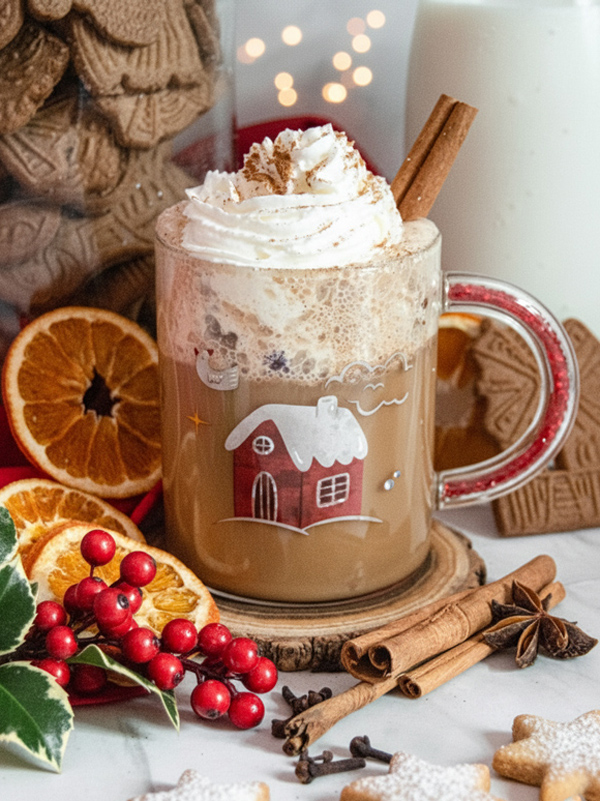
Vegan Gingerbread Latte is the obvious pairing for a baking afternoon, made with the same spices as the biscuits themselves, so it’s worth making a pot while the dough chills or the traybake is in the oven rather than treating it as a separate job. It also means anyone not directly involved in the baking still gets a hit of the same flavour without needing to wait for the oven timer.

Cut-out gingerbread biscuits keep well in an airtight tin for a couple of weeks, and un-iced ones freeze well for up to three months, worth doing if you want a head start well before 1 December. House panels are best baked fresh close to when you plan to assemble, since a panel that’s gone slightly soft in storage is harder to build with cleanly. A gingerbread loaf or traybake freezes well whole or sliced, and actually improves slightly in flavour after a day or two once the spices have had time to settle through the crumb.
This article is for general information only and is not a substitute for professional medical or dietary advice.