


A Cook’s Guide to Chestnuts
Chestnuts sit slightly apart from the rest of the nut aisle. They’re lower in fat and higher in starch than almonds, cashews or walnuts, which makes them behave more like a root vegetable or a grain than a typical nut, and it’s exactly why they turn up in stuffing, soup and cake with equal ease. Fresh chestnuts have a short season through autumn and into December, but we stock them cooked, tinned, dried, ground into flour and blended into a sweet spread, so there’s a form that suits whatever you’re making, whatever the month.
Here’s what each form is for, how to handle fresh ones, where chestnuts sit compared to other autumn nuts, and where to start cooking with them.
The Forms We Stock, and What Each One Is For
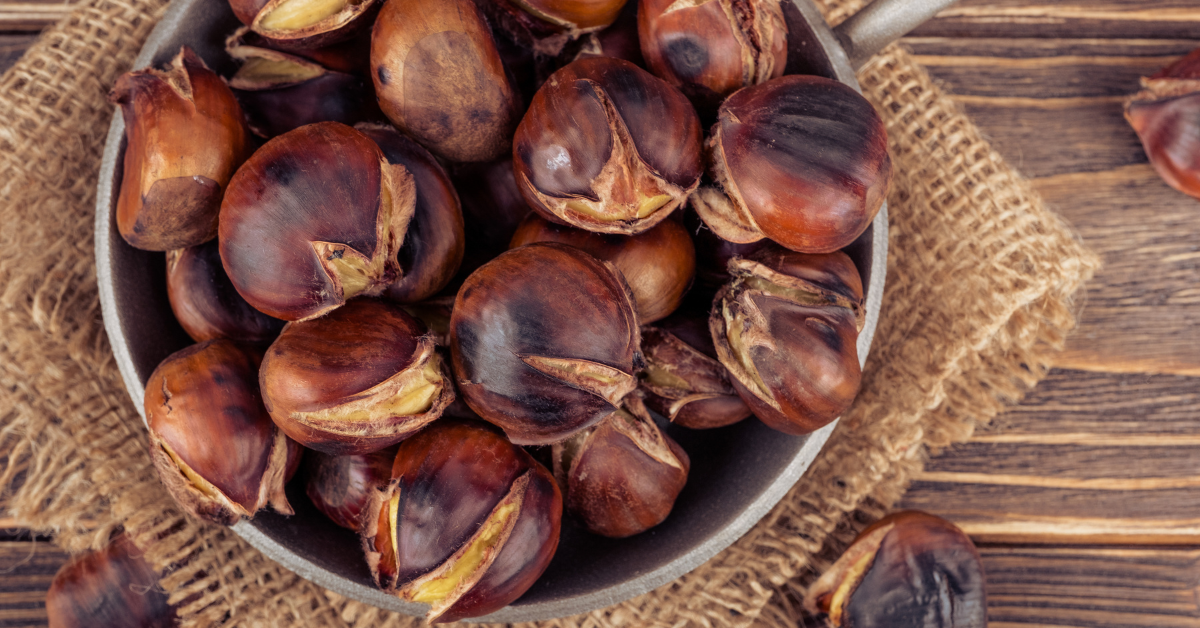
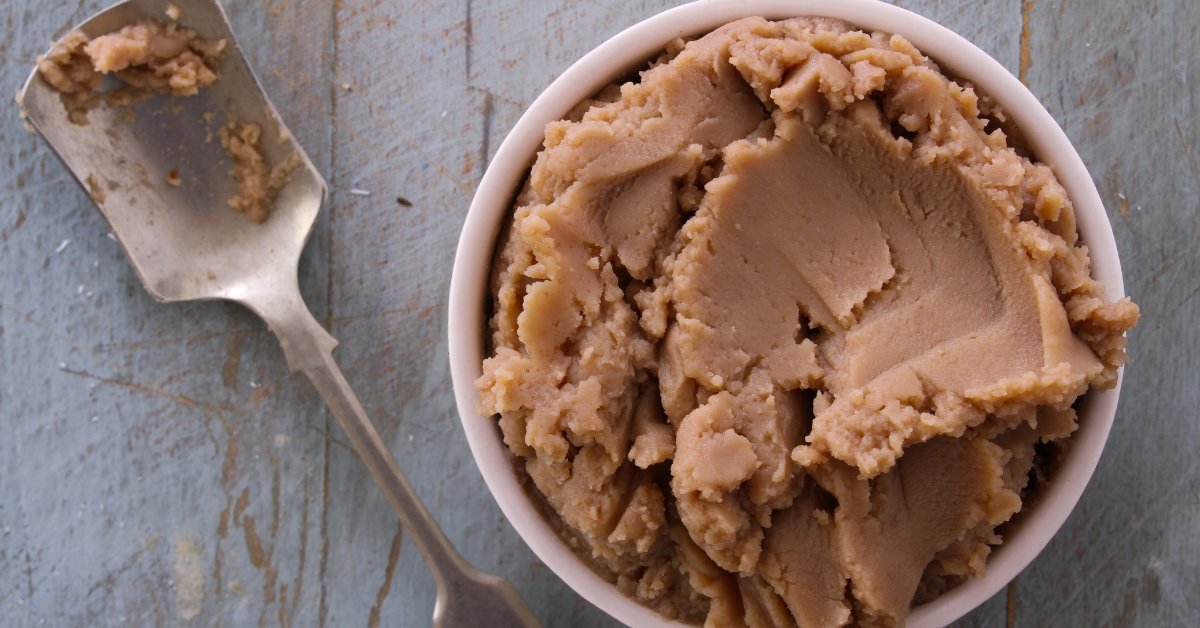
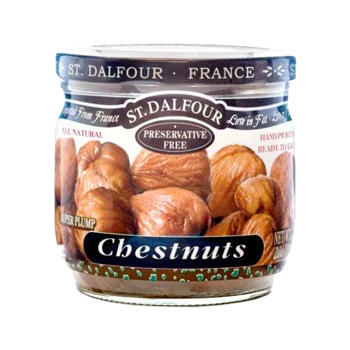
Fresh chestnuts need roasting and peeling before they’re any use in a recipe, so most cooks reach for one of the prepared forms instead: Organic Chestnuts, Cooked & Peeled are vacuum-packed and ready to use straight away in stuffing, soups or a stir-fry. Whole Tinned Chestnuts are a good store-cupboard standby with a longer shelf life. Chestnut Flour is naturally gluten-free, with a faintly sweet, nutty flavour that works well blended with other gluten-free flours in baking. Chestnut Spread is a ready-made sweet purée, closer to a fruit spread than a nut butter, brilliant stirred through porridge or spooned into a cake batter. And Roasted Chestnut Snack Packs are worth keeping in a bag or lunchbox for eating as they are, no prep needed at all.
See the full chestnut range for the complete list.
How to Roast and Peel Fresh Chestnuts
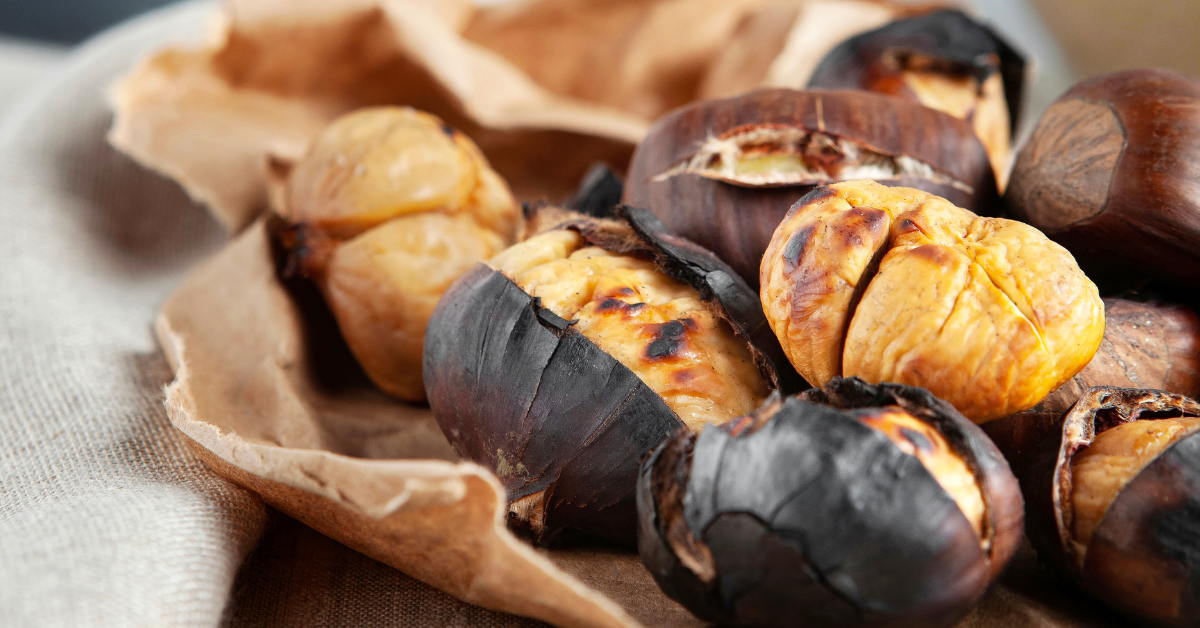
If you do pick up a bag of fresh chestnuts, score a cross or a single deep line through the flat side of the shell with a sharp knife before cooking, this stops them exploding in the oven and makes peeling far easier afterwards. Roast at around 200°C for 20 to 25 minutes, until the shells curl back at the score mark and the flesh feels tender when pressed. Wrap the roasted chestnuts in a clean tea towel for a few minutes while they’re still hot, the steam loosens the inner skin, then peel while they’re still warm, as they become much harder to shell once fully cool. Boiling is the other option if the oven is busy with something else: simmer scored chestnuts in water for around 15 minutes, then peel the same way while warm. Either method, expect to lose a small amount to spoiled or mouldy nuts, it’s normal and worth checking for as you go rather than after the whole batch is roasted.
Chestnuts Compared to Other Autumn Nuts
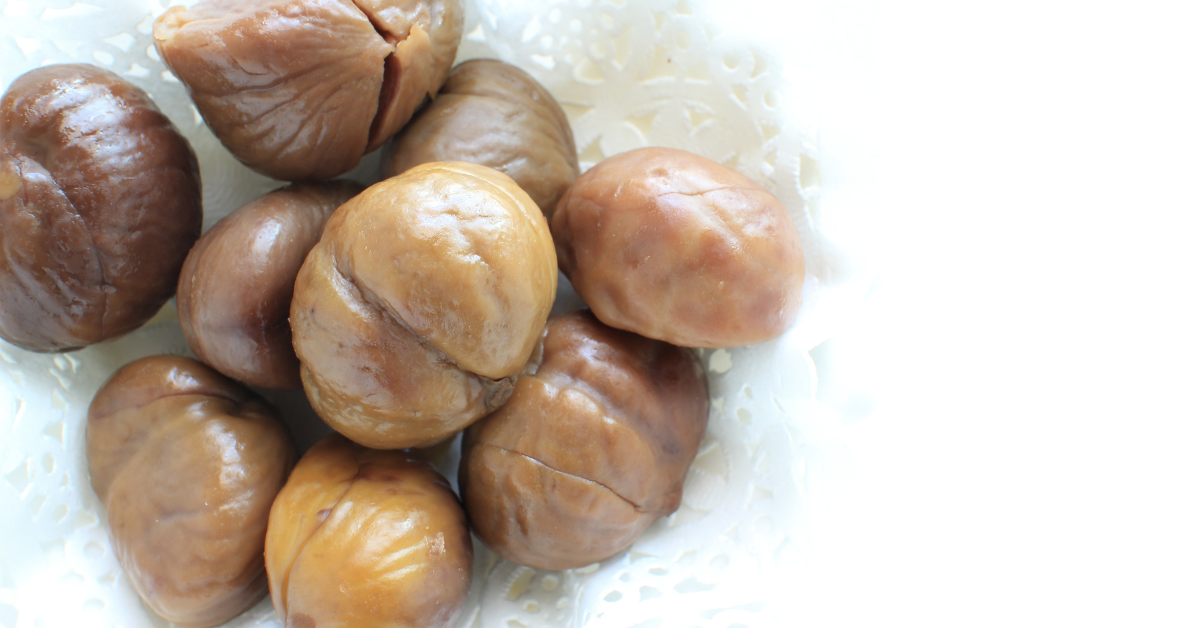
Where walnuts, almonds, cashews and hazelnuts are all fairly high in fat and calories for their weight, chestnuts are mostly starch and water, closer in composition to a potato than to a walnut. That’s why they can be roasted and eaten by the handful the way you might eat a jacket potato, without the richness that makes other nuts more of a small handful food. It also means chestnuts don’t work as a direct swap for other nuts in most recipes, a chestnut can’t replace an almond in a frangipane or a cashew in a dairy-free cream, because the texture and fat content are simply too different. Treat chestnuts as their own ingredient rather than a substitute for something else, and they make far more sense in the kitchen.
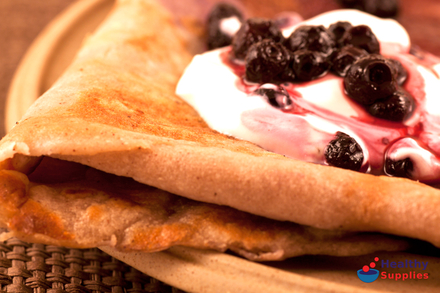
Chestnuts have a natural sweetness that suits desserts as well as anything more obviously indulgent. Chestnut Pancakes use chestnut flour in place of some or all of the usual flour, giving a subtly nutty pancake that works with sweet or savoury toppings. Sugar-Free Chestnut Cake leans on the chestnuts’ own sweetness so it needs very little added sugar. Chestnut spread stirred through porridge, or used as a cake filling in place of jam, is an easy way to bring the flavour into an everyday breakfast without a recipe at all, and it pairs particularly well with dark chocolate if you want something a little more indulgent.
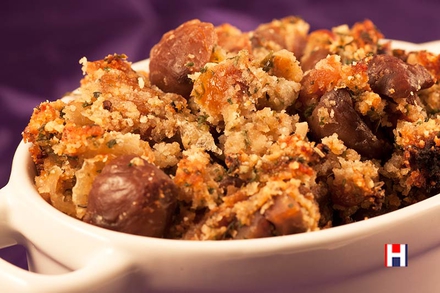
This is where chestnuts are most at home. Chestnut and Apricot Stuffing is the classic use, and works equally well alongside a roast dinner in October as it does at Christmas. Tigernut, Pear & Chestnut Salad is a lighter, autumnal way in if stuffing feels like a step too far in October. Beyond specific recipes, a handful of roughly chopped cooked chestnuts stirred into a pumpkin or squash soup in the last few minutes of cooking adds a texture that’s genuinely hard to get any other way, and they work just as well crumbled over a grain bowl, folded through a risotto, or added whole to a slow-cooked stew where they’ll break down slightly and thicken the sauce.
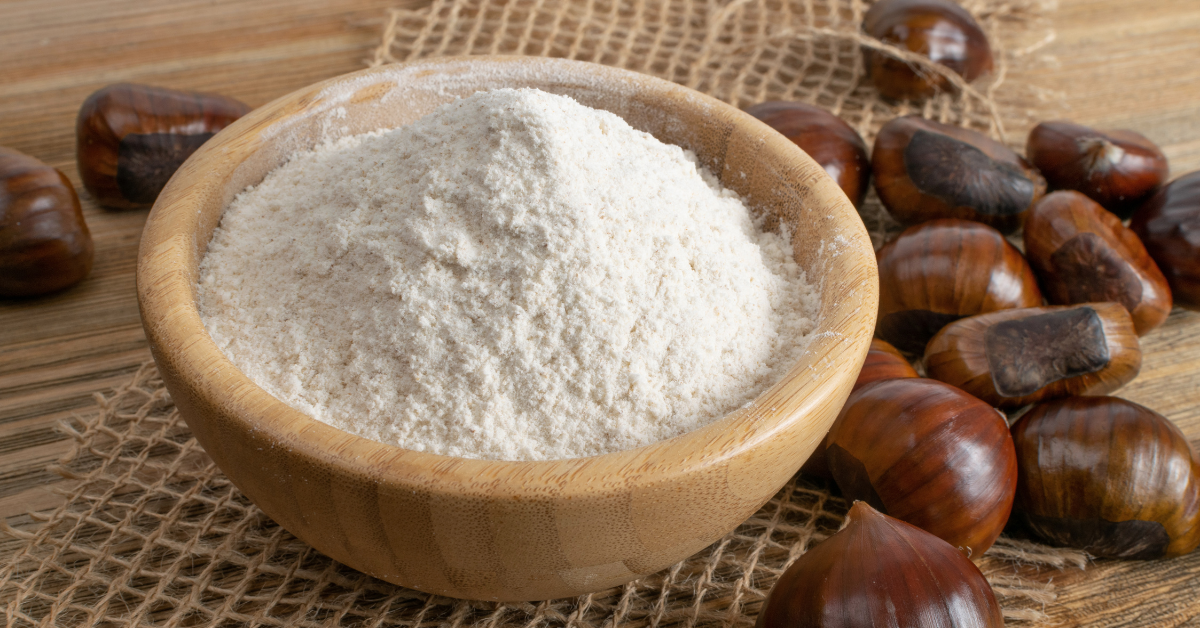
Baking Gluten-Free With Chestnut Flour
Chestnut flour is naturally gluten-free, but it doesn’t behave like a plain flour on its own, it has no gluten to give structure, and its flavour is quite pronounced. For most baking it works best blended with a gluten-free flour blend or ground almonds rather than used alone, at somewhere around a quarter to a third of the total flour, which is enough to bring the flavour through without the bake becoming dense or crumbly. It’s worth a small test batch before committing it to a big occasion cake, and it’s particularly good in anything already spiced, gingerbread and spiced biscuits especially, where the chestnut flavour has something to sit alongside rather than standing alone.
What Chestnuts Bring to the Table Nutritionally
Because they’re lower in fat and higher in carbohydrate and fibre than most other nuts, chestnuts are worth thinking of as a starchy side rather than a rich, occasional treat, they’re closer in that sense to a potato or a serving of rice than to a handful of almonds. That makes them a genuinely useful autumn ingredient for bulking out a meal without the richness that a nut-heavy dish can bring, and it’s part of why they’ve traditionally been such a substantial part of the diet in chestnut-growing regions of Europe, roasted, boiled or ground into flour as a staple rather than an occasional extra.
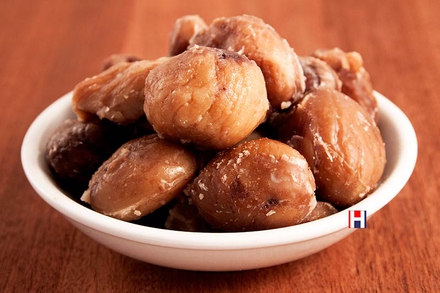
If you’re buying fresh chestnuts rather than a prepared form, a bit of care at the shop saves disappointment at home. Choose nuts that feel heavy for their size and have firm, glossy shells, a light or rattly-feeling chestnut usually means the flesh inside has dried out. Avoid any with soft spots, small holes, or a shell that’s visibly cracked, all signs the nut inside won’t be usable. Buying a few more than a recipe calls for is sensible too, since it’s normal to lose a small number to spoilage once you get to peeling, and there’s rarely a shortage of ways to use a spare handful of roasted chestnuts.
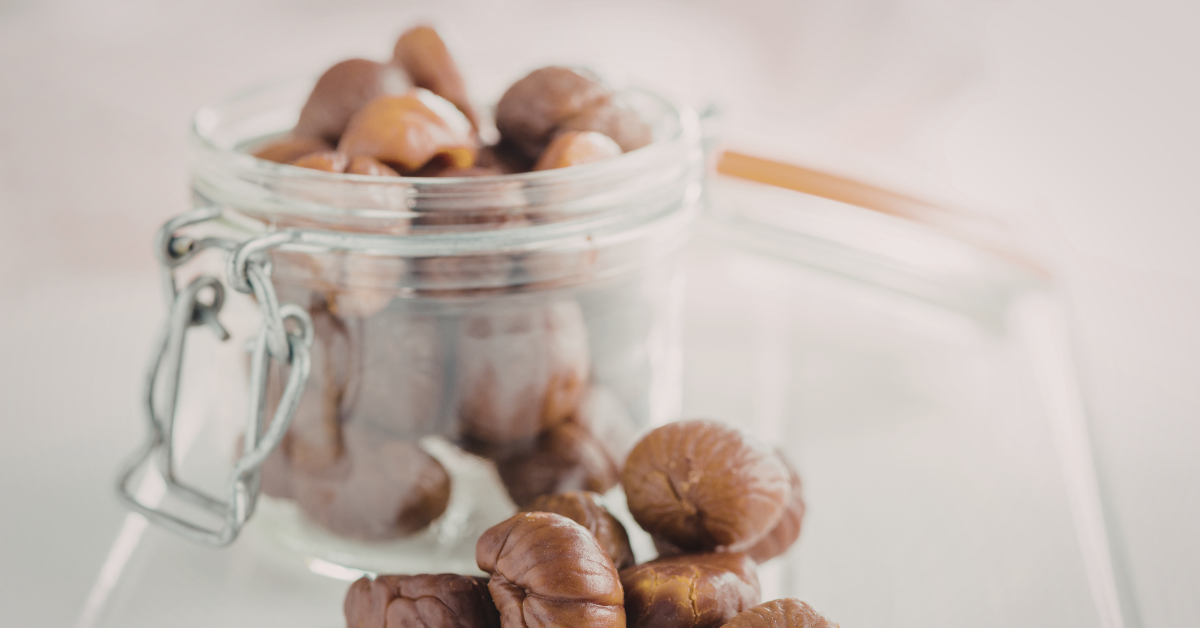
Fresh chestnuts are more perishable than other nuts because of their higher moisture content, keep them in the fridge in a paper bag (not sealed plastic) and use them within a couple of weeks. Vacuum-packed and tinned chestnuts keep in the cupboard until opened, then in the fridge for a few days once opened. Chestnut flour, like any flour, keeps best in an airtight container somewhere cool and is worth using within a few months for the best flavour, it can also be frozen if you’ve bought more than you’ll get through in that time.
This article is for general information only and is not a substitute for professional medical or dietary advice. Chestnuts are a tree nut and unsuitable for those with a tree nut allergy.