


The Vegetarian Christmas Centrepiece, Compared
Choosing what goes in the middle of the table on Christmas Day is, for a lot of vegetarian and vegan households, a bigger decision than anything else on the menu. A Wellington, a nut roast and a seitan “turkey” all do roughly the same job, they’re the thing everyone’s plate is built around, but they involve genuinely different amounts of work, different equipment, and suit different sized tables. Here’s how the three compare, so the decision can be made in November rather than in a panic on the 23rd.
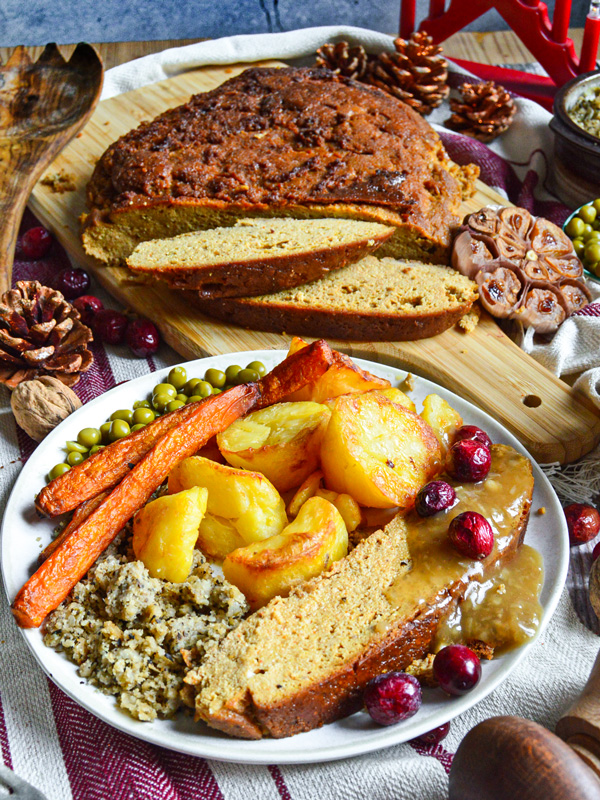
A Wellington wraps a savoury filling in puff or shortcrust pastry and bakes it until the pastry is golden, giving a centrepiece with genuine visual drama when it’s sliced at the table. A nut roast is a dense, baked loaf built from ground or chopped nuts, breadcrumbs and vegetables, closer in spirit to a stuffing than a pastry dish, and usually the least fussy of the three to get right. A seitan “turkey” is built from vital wheat gluten worked into a dough, seasoned and shaped to roast and carve like a conventional bird, the most involved of the three but also the closest thing to a traditional roast-and-carve centrepiece if that’s what the table is used to.
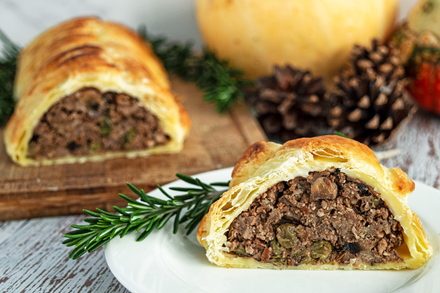
Lentil & Vegetable Vegan Wellington
Lentil & Vegetable Vegan Wellington builds its filling from green lentils, walnuts and root vegetables, held together and given depth with tamari and a good vegetable bouillon, then wrapped and baked until the pastry is crisp. It’s genuinely the most visually impressive of the three when it comes to the table, sliced to reveal the filling, but pastry work is the trade-off, it needs a reasonably steady hand and a proper chill before baking to avoid a soggy base. Worth practising the pastry wrap once before the day itself if it’s new to you.
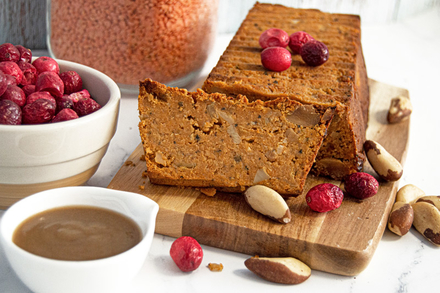
Brazil Nut, Lentil & Tomato Roast
Brazil Nut, Lentil & Tomato Roast is the most forgiving of the three to make, it’s mixed, pressed into a tin and baked, no pastry, no shaping, no risk of a collapsed wrap. It slices cleanly once cooled slightly, which matters more than it sounds for a table where people want a neat portion rather than a scoop. It’s also the easiest of the three to make well ahead and simply reheat on the day, since a nut roast holds its texture through a reheat far better than pastry does.
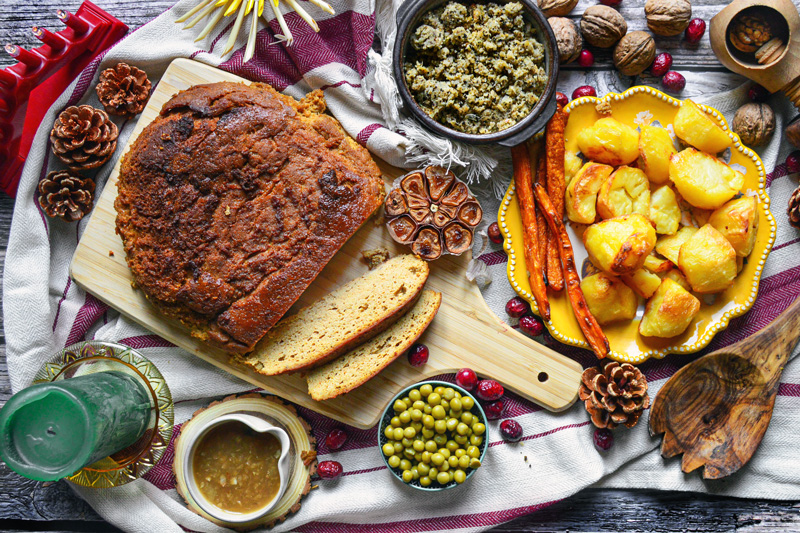
Seitan Turkey is the one to reach for if the table’s used to carving a traditional bird and would miss that ritual more than anything else about a meat-based Christmas dinner. It’s built from vital wheat gluten and takes the most hands-on time of the three, kneading, shaping and a longer cook, but the result genuinely carves and serves like a roast. Sweet Mustard Glazed Seitan is worth knowing about too, a different glaze and flavour direction on the same base technique, useful if seitan works for your table but the classic turkey flavour profile doesn’t feel necessary.

How Far Ahead Each Can Be Made
This is where the three differ most in practice. A nut roast can be fully made, cooled and frozen weeks ahead, then defrosted and reheated on the day with no loss of texture, making it the easiest to fit around a busy December. Seitan also freezes well once cooked, and in fact benefits from a day or two resting in the fridge before serving, so it can comfortably be made several days ahead. A Wellington is the one exception, the pastry is genuinely best assembled and baked within a day or so of serving, though the filling itself can be made and frozen well ahead, leaving only the pastry wrap and bake for the day itself.

For a smaller gathering, the nut roast is the easiest to scale down without the whole dish falling apart, a loaf tin comes in enough sizes to make a small batch look properly generous rather than sparse. A Wellington is trickier to shrink, since a very small pastry parcel is harder to slice neatly and more prone to a soggy middle, it suits a table of four or more better than a table for two. Seitan scales reasonably well either way, since the shape is entirely up to you.

Which Suits a Bigger, Mixed Table
For a larger table, especially a mixed one where only some guests are vegetarian or vegan, the Wellington’s visual presentation earns its keep, sliced at the table alongside a meat option, it doesn’t read as an afterthought the way a smaller side dish can. A seitan turkey works well here too for the same reason, it looks and carves like the centrepiece it’s meant to be rather than something apologetically tucked to one side.
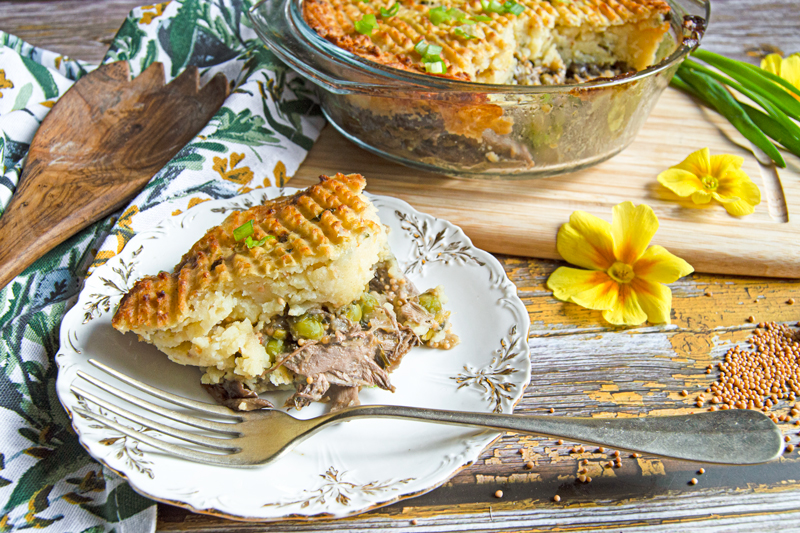
No Fish "Fish" Pie, as a Fourth Option
Worth a mention for any household where the centrepiece question isn’t really about turkey at all: No Fish “Fish” Pie uses banana blossom and sea salad to build a genuinely convincing plant-based fish pie, a good option for a table that would otherwise be building the day around a seafood main rather than a roast.

Making the Decision Now, Not on the 23rd
Whichever of the three you land on, the practical case for deciding in late November rather than a few days before Christmas is straightforward: it lets you buy the specific ingredients, vital wheat gluten and tamari for seitan, or pastry and a full range of nuts for a Wellington, well before the shelves get patchy, and it means the make-ahead and freezing steps above can actually happen on schedule rather than being skipped under time pressure. None of the three needs to be a last-minute decision.
This article is for general information only and is not a substitute for professional medical or dietary advice.